Kita Eingewöhnung: our three weeks, day by day
The German kita settling-in process, from a dad who sat through every minute of it. Our week-by-week account of the Eingewöhnung: the phases, the parent's job, and where it nearly fell apart.
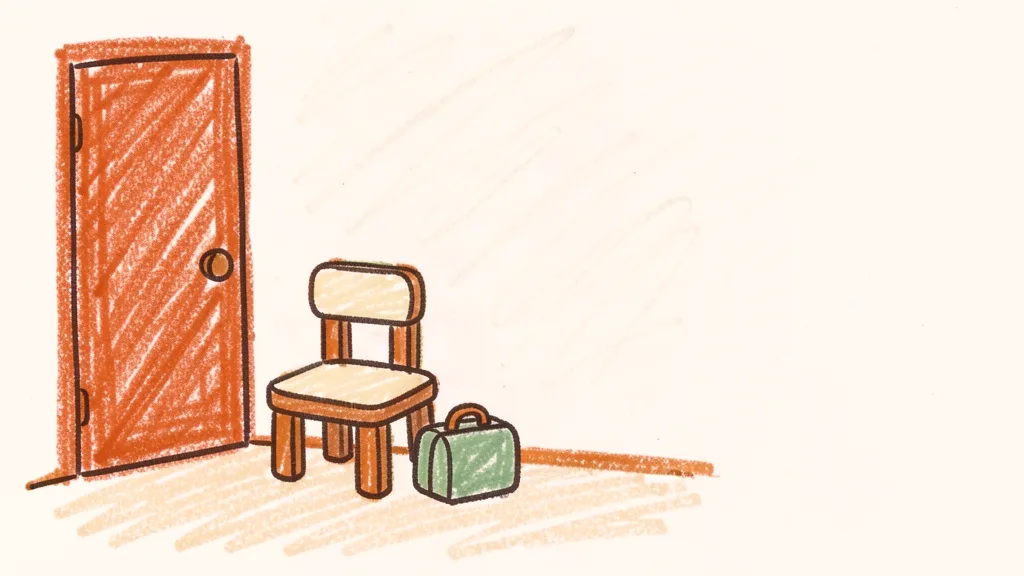
We had read about the Eingewöhnung before our toddler started kita. The theory survived contact with the tiny chair for about one morning.
The Eingewöhnung is the German settling-in process, and it gets a lot of build-up. Friends warned us, and so did the blogs. The kita handed us a printed schedule. None of it matched the actual three and a half weeks, so here is the real version, day by day.
What the Eingewöhnung actually is
The Eingewöhnung is a slow, structured handover from parent to educator. Your presence in the room is not a formality. It is the mechanism.
The idea behind it is simple. A child who starts kita lands in a room full of strangers, noise, and new rules. Instead of dropping them off cold, the system lets the child build a new attachment slowly. The parent sits in the room while the educator plays nearby. Over days and weeks, the educator becomes the person the child turns to first.
As a general rule, settling in takes about six to eight weeks, according to the pme family service guide. Ours took about three and a half, and some children need longer, which is normal too.
Two models dominate, and they feel very different from the parent’s chair.
| Berliner Modell | Münchner Modell | |
|---|---|---|
| Structure | Fixed phases, first separation on day 4 | No fixed phases, paced to the child |
| First separation | Planned, about 30 minutes | When educator and parents agree |
| Parent’s role | Present and passive | Present and closely involved |
| Our kita | Ran close to this one | Too loose for our nerves |
Our kita ran a version close to the Berliner Modell. Knowing the phase names helped more than I expected. On the days we understood what was happening, we stopped panicking.
Our Eingewöhnung, week by week
Ours took about three and a half weeks from first visit to first full day. It moved in small, boring increments, and the boring increments were the point.
Days one to three were the Grundphase. One hour each morning, me on the tiny chair, the toddler exploring the room. Separation time: zero. We were furniture with a pulse.
Day four was the first separation: the educator took over, and I left for 30 minutes. I stood outside the gate the whole time. The toddler cried for maybe two minutes, then found the water table.
Day five was 45 minutes and day six was 60. The pattern repeated: I left, the toddler cried briefly, the toddler recovered. Week two stretched the separation to 90 minutes, and week three jumped to half days of about 180. Week four delivered the first full day, about 420 minutes, and the toddler came home asleep in the carrier.
The chart is our numbers, not statistics. One family, one kita, one toddler. The shape matters more than the values. There is a long flat start, a slow climb, and then a sudden jump. Nothing happened on day one. Everything happened by week four.
The parent’s real job
The parent’s job in the Eingewöhnung is to be present, boring, and calm. That is the whole job, and it is harder than it sounds.
Sitting still sounds easy, and it is not. The room is loud, the educator is busy, and your child is doing something new every few minutes. The urge to narrate, guide, and rescue is strong. The job is to sit there and let the toddler explore from the safe base.
TipSit still and be boring. The toddler needs a base to explore from, not a tour guide. If you hover, the exploration stops.
We failed at this on day two. I started pointing at toys, explaining the room, performing helpful dad. The toddler stopped exploring and came back to me, and the educator smiled and said nothing. That was lesson one, delivered silently.
The anxiety is yours, not the child’s, and the toddler read my shoulders before she read my words. On calm mornings the goodbye was easy, and on rushed ones it was not. I started doing breathing exercises in the stairwell. It helped more than the books did.
Where it nearly fell apart
An illness pause and one crying morning nearly made us think the whole Eingewöhnung had failed. It had not, because the system absorbed both.
Week two brought the illness. The toddler woke up with a fever, and the kita said the obvious thing: sick days do not count. The Eingewöhnung pauses but does not reset. We had already rebuilt the whole process from zero, while the staff simply moved a date.
The crying morning was worse, starting on day six with the first 60-minute separation. I heard the toddler crying through the door, and I stood in the stairwell for what felt like an hour. The staff called at lunch to report she had been fine within five minutes and had eaten twice.
The gap between what we imagined and what actually happened was the whole lesson. We imagined a child in distress. The reality was a toddler who cried at the door, then found the water table.
ImportantTransition crying is normal, and most of it ends quickly once the door closes. Persistent distress, refusal to eat, or a child who cannot be calmed: talk to the kita staff, then your pediatrician. This is our experience, not medical advice.
The staff told us their red flags and normal range, and ours was wider than we expected. If it ever goes beyond their range, a professional’s view is the next step, not another article.
What we’d do differently
In hindsight, three small changes would have helped: fewer questions, more patience, and a backup plan for sick days.
We asked the educators twice as many questions as we needed. They have done this hundreds of times. Our questions were really about our own anxiety, and the answers never stuck until we watched the process play out. Next time: fewer questions, more watching.
The pause taught us patience. We treated the illness week as a restart. It was a speed bump. The toddler came back and picked up exactly where the process had stopped.
And the backup plan. We had not named who would cover the sitting phase if one of us got sick. We had not blocked the calendar for the full two weeks. We sorted both under pressure. Sort them before the first day instead:
- Ask the kita for their Eingewöhnung schedule before the first visit.
- Block two weeks of calendar, not one.
- Name the backup parent and a backup grandparent for sick days.
- Pack the kita bag the night before.
The process is easier when you know the phases, and the phases are easier when the goodbye is a ritual. Our slow goodbye ritual post covers the daily script that carried us through. The same predictability that calms toddler meltdowns is what makes the Eingewöhnung work. And once you have been the parent who stays, you understand the sitting phase from the inside.
The Bottom Line
- The Eingewöhnung is a slow handover, and the parent sitting in the room is the mechanism.
- Our numbers: zero separation for three days, then 30 minutes, then a jump to full days by week four.
- The parent’s anxiety is the hidden variable. The child reads the shoulders.
- Sick days pause the process. They do not reset it.
- Persistent distress is a question for the kita staff and your pediatrician, not another blog post.
Filed under kita-age; everything we’ve written is in the archive.