The "one more" negotiation: how we ended the loop
Our toddler's one more was never about the one more, just a request to keep the ending open. See the counted offer that closed the loop and the script we use.
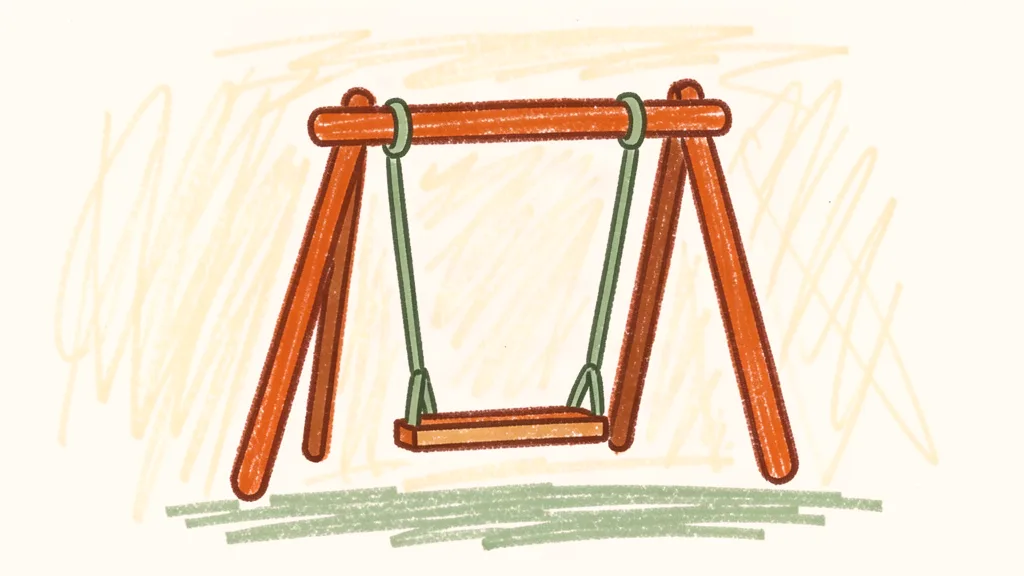
The fourth “one more” came at 6:18pm on a Thursday in July, at the playground behind the kita. The toddler was on the swing; I had granted the first three because each one seemed small. The fourth went through too, since I had lost count by then. She asked for a fifth; I carried her to the pram, where the baby slept through the whole debate.
That was the evening I started counting, because every “one more” meant the same thing: keep the ending open. She was not asking for one more ride; she was asking for the ride to never end.
One more is never one more
The phrase is a loop, not a request. Each “one more” means one more after that; every grant opens the next request. The ending never arrives because the loop is the point. It shows up at the swing, the bookshelf, the bedroom door, the tram stop; same words, every time.
The toddler is not being difficult on purpose. Her job is finding out where the edge is; every grant moved the edge. “One more minute at the park” is the same loop with a watch instead of a swing.
Wednesday of that week set the record. Between bath and bed, the toddler asked for “one more” nine times: water, book, cuddle, song, another book. The ninth request came at 8:52pm, from a child who was supposedly asleep. The baby slept through all nine. I counted because I had started to suspect something; the number was not the point, the pattern was.
| She says | What she means | What it needs |
|---|---|---|
| “One more swing” | The fun ends | A counted ending |
| “One more book” | The evening ends | A named ending |
| “One more cuddle” | You leave | A bounded goodbye |
Zero to Three puts it in one line: limits teach family rules and appropriate behavior. Limits teach. The loop teaches the loop.
At the bedroom door, the loop has a famous local branch. The third book request at 8:41pm was the same loop; the soft option ended it (the bedtime-stalling post). The counted offer ended the rest of it, everywhere else.
What fed the loop
The loop has a fuel line; for two weeks I was the one pouring. I granted four swings that evening because each one seemed cheaper than the fight. Generosity reads as the norm, not as a gift. The next evening, the toddler expected five.
Books, the walk home, the tram: everything ended in a negotiation. Dinner was safe, because we never negotiated food, but everything after it was up for bids.
Then I broke the “last one” promise. At the tram, I said this was the last ride, and she agreed. Then I said it again after one more, because the next tram was minutes away. “Last” meant nothing now; the toddler knew it before I did.
The disagreement was about where the line lives. I argued that one more costs nothing and the line holds after. My partner said the one more IS the line, because you cannot hold a line you keep moving. She was right; I told her so at 9:04pm, while the toddler practiced the loop in the hallway.
Most of this is a scheduling problem, not a character flaw. A tired toddler negotiates worse than a fed one, which is the whole thesis of the terrible-twos post. The counted offer works better when the schedule is already on our side.
The counted offer
The fix came from my partner; it is embarrassingly simple: grant a number instead of a “one more”. “Two more swings. I’ll count them,” which sounds silly until you see it work. The count makes the end visible; the toddler hears it arrive. We rarely offer one, because one is a request with a countdown attached. Two or three reads as a real offer; the count turns the ending into something she can watch arrive.
The first success came the next evening at 6:24pm, on the same swing. “Two more swings. I’ll count them.” One, two. She slid off the swing and walked to the pram, while I stood there holding the count like a fool.
We logged the experiment for two weeks, one July week before and one after. Requests per evening, counted at the kitchen table like a family budget. The record Wednesday became an ordinary evening; the week’s total went from thirty-five to eight.
TipThe last-lap rule: name the last one in advance, count it out loud, honor it. After the count, one warm no, then the next-thing line. “Last” only works if it is true.
The kitchen timer did this for the sharing fights (the sharing post); the count does it for endings. Same trick, different door.
For time-based requests, the timer does the same job: “one more minute” becomes “when the timer beeps”. The timer does not negotiate, which is the whole trick.
The end-of-thing script
The script is five lines; it is stuck to the fridge like a recipe.
- Name the number first. “Two more swings.”
- Count out loud. The toddler hears the end arrive.
- Honor the count. No bonus laps.
- One warm no after. “We said two. The swing is done.”
- Say the next thing. “Shoes on, then the tram.”
The warm no is not a second negotiation. It is the count’s last word, said once.
Same script at the bookshelf, the bathroom, the tram stop. It also ends the show, which is the job the off-switch ritual does for screens (the screen-time post). The count works because it is visible; the toddler can hear it running down.
When it still melts down
Some endings melt down anyway; that is normal, not a failed system. Tantrums are normal between one and three, per the AAP. The exit plan handles the ones that happen in public, where the audience makes it worse.
ImportantIf meltdowns are constant, self-harming, or worsening, talk to the pediatrician. That is our frame, not medical advice. We asked once; the answer was to keep the script boring and consistent.
The counted offer did not end every loop, but it ended most; that was enough to change the evenings. The toddler still tries “one more” at the swing. The difference is that now it costs her one request; the answer is already counted.
The Bottom Line
- “One more” is a loop, not a request.
- Grant a number instead of a “one more”.
- Name the last one and honor it.
- The count did what the warnings could not.
- Meltdowns at endings are normal; the script just makes them rarer.
Filed under toddler; everything we’ve written is in the archive. The editorial policy is the honest version of how this site works.