Drop-off separation anxiety: the tears that came back
The toddler cried at the kita gate for three weeks after the Ferien. See the separation anxiety drop-off ritual that cut crying from nine minutes to one.
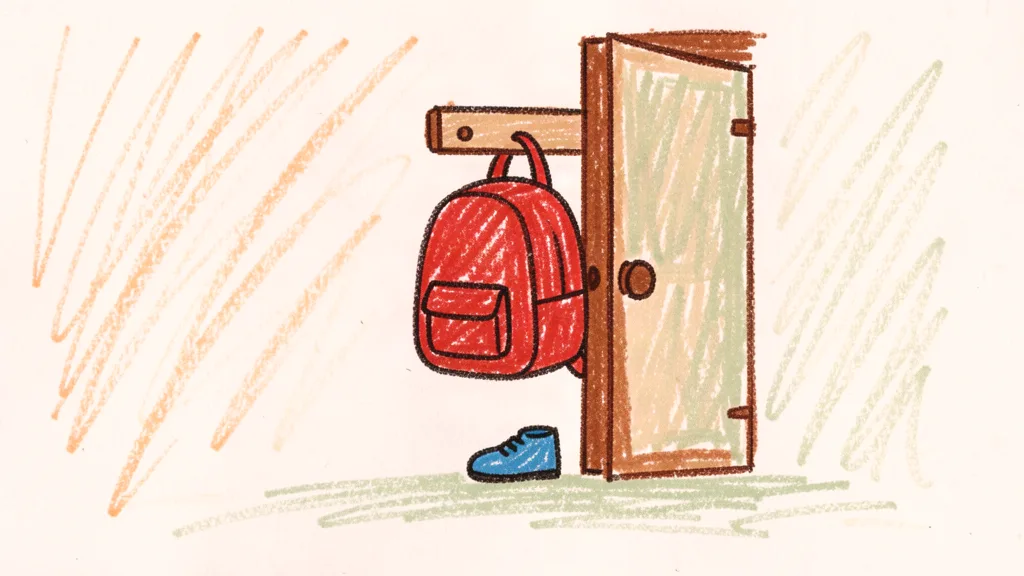
The first Monday back after the Ferien, the toddler’s legs locked around my waist at the gate. It was 8:12am. She cried into my shoulder while the educator held out a hand and said her name. She had been settled for weeks before the break. The Eingewöhnung was done. This was something else.
The two closed weeks looked fine from the sofa; we covered them the way we planned, grandparents included. Day one back was the bill. For three weeks after that, the drop-off was a small daily crisis. I logged the crying because logging was the only thing that kept me from pacing.
NoteCrying at the gate belongs to the goodbye; it does not mean the day went badly. If the child settles within minutes, the day is fine. Our log made that visible; keeping it helped more than any advice we read.
The tears came back after the Ferien
Separation anxiety returned exactly when we thought we were finished with it. The two-week break triggered it. The Eingewöhnung itself had gone fine; I know that only in hindsight. On day one I did not.
That first morning, the toddler wrapped herself around my leg before we even reached the door. I carried her in; she clung. The educator peeled her off gently, and I walked out to the sound of crying. The car was quiet on the way home. I called the kita at lunch. They said she had been fine within five minutes and had eaten twice.
The break itself was never the problem. We covered the two closed weeks and how we filled them; they were genuinely good weeks. The return is where we paid. A settled child re-tests the separation after any pause in the routine: a long weekend, an illness week, a holiday. Each one restarts a smaller version of the goodbye.
What drop-off separation anxiety actually is
Crying at the door is a normal developmental wave. It usually ends minutes after the door closes. The parent’s chest tightens while the child recovers; the recovery is the signal that matters.
The wave comes back because routines break. Ours broke at the Ferien. The toddler’s world had also gained a sibling who took up a lot of my attention at the gate. The educators were unsurprised. They see the returning wave after every break, they said. It passes faster the second time.
The difference from the Eingewöhnung is worth naming. During settling-in, we were building trust from zero, sitting on the tiny chair and being as interesting as the furniture. This time we were watching a temporary dip in trust that already existed. The tools are the same, though there is less to rebuild this time. The Eingewöhnung post, day by day walks through the difference.
What the Münchner Modell says about separation
The model’s core rule is simple. The first separation happens only when the child is ready. The goodbye is a short, repeatable ritual that is not up for negotiation. German kita follows one of two settling-in models. The Münchner Modell is the one that talks most about the moment of separation.
It runs in five phases: Vorbereitung, Kennenlernen, Sicherheit, Vertrauen, and Auswertung. The ElternLeben guide and the Pro Kita Portal explainer name them the same way. The separation time lengthens gradually, from ten minutes up, only when the child accepts being comforted by the educator. Both models make the goodbye ritual central; both guides say sneaking out backfires.
Our kita ran a version close to the Berliner Modell, which we covered in the slow goodbye pillar post. That detail matters less than the shared logic: child-readiness over calendar, and a boring, repeatable goodbye. Two ideas from the Münchner Modell carried us through those weeks. Separate only when ready. Make the farewell boring on purpose.
| What we tried at the gate | What happened |
|---|---|
| Sneaking out while she played | The worst morning of the log. Twelve minutes of crying, our longest, and a second goodbye when she found me gone. |
| Long goodbye, one more hug, one more kiss | Every extra hug restarted the goodbye. The drop-off stretched to twenty minutes, and she cried anyway. |
| The three-step ritual | Crying dropped from nine minutes to under one across three weeks. |
| Alternating which parent drops off | Worked once the ritual existed, useless before it. |
The ritual that stuck
Three fixed steps, repeated every morning, turned the drop-off from a fight into a formality. Nothing about it is clever. The repetition is the whole point, because a toddler can predict a routine she has seen twenty times.
The sentence comes first, at the gate, in the same words every day: “Papa comes back after breakfast.” Then one hug, one kiss, and her hand goes to the educator. Then I walk. I still look back through the window, but she does not see it.
I snuck out once, early on. She cried longer that morning than any other in the log, while the educators were gentle about it. The toddler was not. Sneaking out saves the parent thirty seconds and costs the child a trust transaction. I never did it again.
We also argued about who should do the drop-off. I thought the partner was better at it, because the toddler cried less for her. The partner pointed out that the toddler cried less for whoever went second, because the ritual was already half done. We alternate now. The routine made us interchangeable, which is what we wanted.
- The same sentence at the gate, every morning.
- One hug, one kiss, no second round.
- Hand to the educator, then walk.
- No looking back from inside the room.
The line fell week by week, in steps. Each step followed a week of the same boring goodbye; the crying never vanished on a single morning. It just stopped being the first thing I heard.
When to actually worry
Crying at the door that ends in minutes is normal. Distress that does not end is a question for the educators first, and the pediatrician second. Our kita staff named their red flags early. A child who will not eat, who cannot be calmed, or whose distress lasts well past the morning. Our toddler never hit any of them. Knowing the line existed was what let me sleep.
ImportantThis is our experience, not medical advice. Persistent drop-off distress, refusal to eat, or a child who cannot be comforted. Talk to the kita staff, then your pediatrician, because they have the context a blog post cannot. Our editorial policy explains how this site is written.
The Bottom Line
- Separation anxiety returns in waves. A two-week break is enough to start one.
- The goodbye is a script: one sentence, one hug, hand to the educator, then walk.
- The crying fell in steps, not all at once. The steps followed the same boring goodbye.
- Crying that ends in minutes is normal. Distress that does not is a question for the educators and your pediatrician.
Filed under kita-age; everything we’ve written is in the archive.