Snack plates, the toddler edition: the three-slot rule
The three-slot rule turned our toddler's kita snack box around: crunch, fruit or green, protein, plus one new thing. See the packing drill and our snack log.
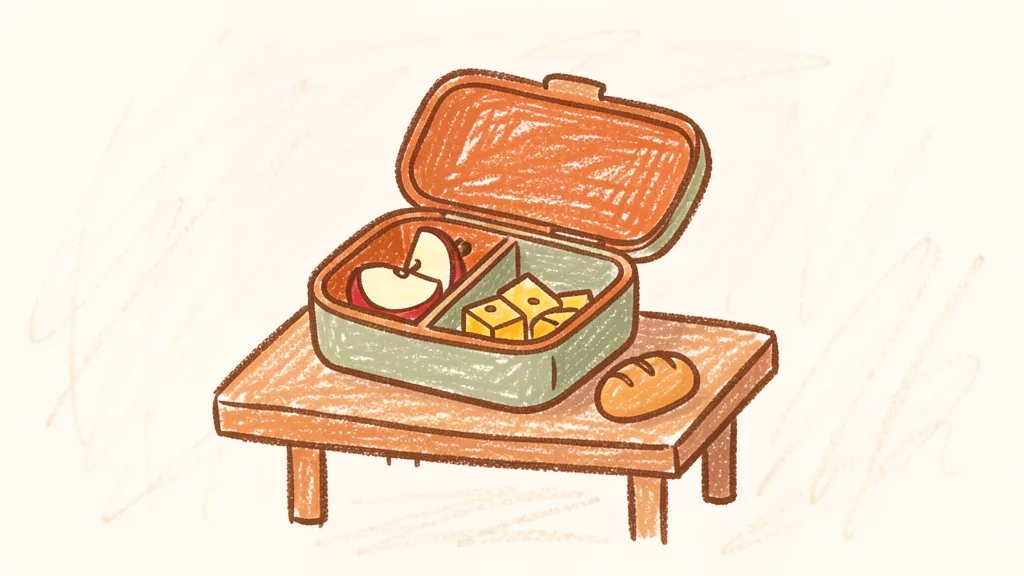
On a Tuesday at 8:35am, I zipped the kita bag over a box I had packed the night before. It came home that afternoon with three of six items untouched. That evening, the toddler ate the same items off a plate at dinner, one by one, no comment. Same food, different container, different result. I had been losing to that box quietly for weeks. A plate showed me why: the daily snack was a packing problem, not an appetite problem.
TipThe short version: one box, three slots. Slot one is something crunchy; slot two is fruit or something green; slot three is protein. A fourth slot holds one new thing; it is allowed to come back uneaten. Packing takes ninety seconds; the box stopped coming home full.
Why the box came back full
The full box was my fault. I packed variety like a menu: bread roll, cheese, apple, cucumber, a yogurt, a meatball. Six different things, none of them familiar as a group. The toddler opened it and ate the bread roll; the rest went untouched. Overwhelm reads as refusal at this age, the way a wall of new foods reads at dinner.
Our picky-eating notes made the same point in June: too many new things is a wall, not a meal. The safe list exists for a reason; the box had ignored it. Cheese cubes and apple slices were on the list. They were also in the box. The problem was never the items. It was the pile.
The parent forums run this exact thread weekly. Parents pack the good stuff; the box comes back full; the usual conclusion blames the appetite. Nobody needs forty more lunchbox ideas. They need one structure that makes the packing boring on purpose. That is where the slots came in.
The three-slot rule
Three slots, three jobs. The menu comes from the safe list, so nothing in the box is a gamble.
| Slot | Job | Safe-list examples | Rule |
|---|---|---|---|
| 1. Crunch | The texture the toddler already accepts | Rice cakes, bread roll pieces, cucumber sticks | Always something she can crunch |
| 2. Fruit or green | The color slot | Apple slices, blueberries, cucumber | Pre-cut, ready to grab |
| 3. Protein | The staying-power slot | Cheese cubes, yogurt pot, meatball halves, egg | One thing that actually fills |
| 4. New thing | Exposure without pressure | Red pepper sticks, a new fruit | Small amount, allowed back |
The crunch slot goes first because texture is the safe door. A familiar crunch makes the rest of the box look less foreign. The fruit slot does the color work; the protein slot does the staying power. We learned that ordering the hard way. The toddler ate the cheese and ignored the rest; she went hungry on the walk home.
The box is a Funkelfuchs compartment box, 500ml, about €15. It has three fixed sections and one small one, which bakes the rule into the hardware. The same box goes every day. Recognition does half the work: the toddler knows what the box is before she opens it.
The new-thing slot is the engine. It is how broccoli finally landed after twelve exposures: present, small, never demanded. Same logic, snack-sized. The box is our kita’s morning snack; the kita covers lunch, so this is the one meal I pack. I wanted to keep adding new items every day. My partner said fill the slots with safe things and stop. She was right; the log settled it.
What the log said
I counted uneaten items every evening for two kita weeks: the free-for-all box first, the three-slot rule second.
The before week wandered all over the place; the after week flatlined near zero. The two remaining ones tell the story. Monday’s was the red pepper sticks, the new thing, which is allowed. Wednesday’s was the yogurt, squashed into the lid on the walk. That is a packing failure, not a taste verdict. Nobody wants a yogurt that has been through a tram ride.
This is two weeks and one toddler; I am not a nutritionist. The log’s real job was smaller: it killed the 6pm spiral of guessing what to pack tomorrow. The numbers made the system obvious, the way our potty log made the no-pressure timeline obvious.
The ninety-second packing drill
The drill lives by the door, next to the wechselsachen bag, where the packed bags wait.
- Box open, three compartments visible.
- Slot 1: one crunchy thing from the safe list.
- Slot 2: one fruit or green thing, pre-cut.
- Slot 3: one protein thing.
- Slot 4: one new thing, small amount, most days optional.
- Lid on, box in the kita bag, no commentary.
The one-slot-out rule: if a slot is empty, the box goes anyway. A half-box beats a skipped box, and the toddler will not starve between kita and dinner. Dinner leftovers become the next day’s protein slot, which is how the box plugs into our five-dinner rotation. The box is the recycling bin of the dinner table.
What we stopped packing: whole bananas, which bruised into the lid like the yogurt. Anything that needs a spoon and two hands, because the kita table is not a restaurant. The tomato soup stays home too, since it is adult-only in our house anyway. The box holds finger food; that is the whole design. If it needs a utensil, it stays home.
The boundary rule keeps the box honest: when the box is empty, the snack is over. We do not refill it from the kitchen. A snack plate is a portion, not a buffet, and the toddler reads the boundary as clearly as we do. The grazing problem parents describe on the forums usually starts with a box that never ends. Ours ends, and the dinner appetite is the proof.
The proof was a Thursday at 7:58am. The box packed itself in under two minutes while the toddler put on her shoes. The baby watched from the carrier. Two days later the box came home empty, which had not happened once in the free-for-all weeks.
Cutting small (the safety frame)
We cut everything for the box small: grapes halved lengthwise, cheese in small cubes, meatballs halved. New shapes get watched the first time they go in. The CDC’s choking-hazards guidance is the page we check, the same one pasta and soup use.
ImportantThis is our experience, not medical advice: we serve bite-size pieces and watch closely with new foods. The CDC’s choking-hazards page covers the official guidance; ask your pediatrician if you have questions.
The Bottom Line
- The full box was a packing problem; the slots fixed it.
- Three slots: crunch, fruit or green, protein. One new thing, allowed back.
- Same box, safe-list menu, ninety seconds in the hallway.
- The log: 3/4/2/3/4 came back before, 1/0/1/0/0 after.
- Our experience, not medical advice.
Filed under food; everything we’ve written is in the archive. We buy our own gear; the editorial policy is the honest version of how this site works.