Rocking her to sleep: 7 fights we stopped picking
Rocking a baby to sleep is not the failure the internet makes it feel like. Here are the seven fights we stopped picking with our second baby, from drowsy-but-awake to the habit fear, and what we did instead.
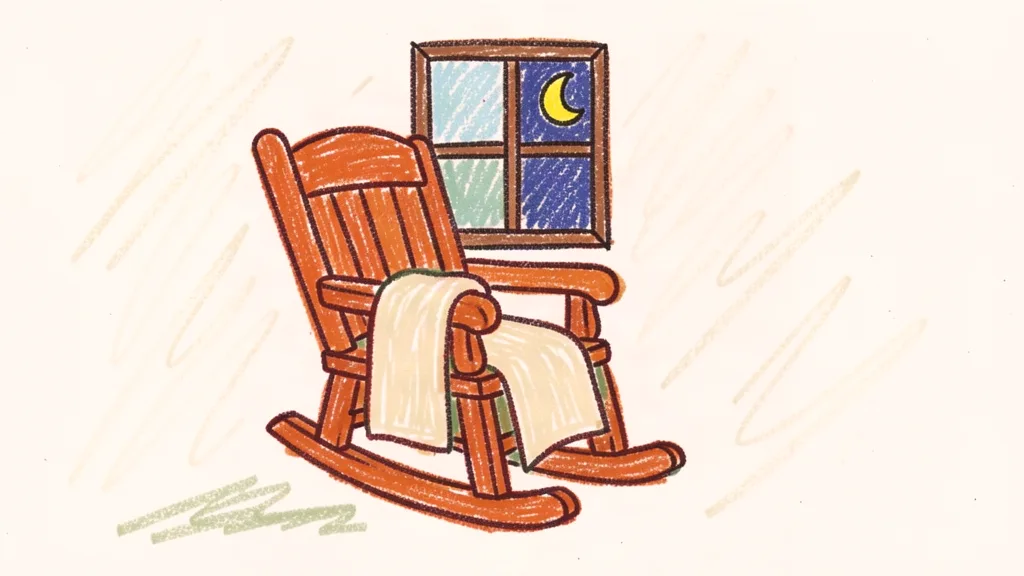
The baby cried from six until nine that spring evening, the fussy window that used to own our flat. At 9:47pm I picked her up and started the rock: slow sway, head on my shoulder, the usual motion. She was under in eleven minutes. I stayed ten more, because the transfer is its own sport; the bassinet took her on the first try. I had spent two months fighting that rock. She had spent them proving the fight was mine.
Rocking a baby to sleep means motion is the last step before sleep. She falls asleep in your arms; you move her to the bassinet or crib. It is a method, not a failure and not a grade.
With our first, we fought the rock the way we fought everything: by measuring it. Our second baby arrived and the fight started again. Then we stopped, one fight at a time; the rock got shorter on its own. These are the seven fights we stopped picking, in the order we dropped them.
| # | The fight | What we stopped doing | What worked instead |
|---|---|---|---|
| 1 | Drowsy but awake | Placing her down awake to “finish the job” | Rocking her fully to sleep, then transferring |
| 2 | The timer | Watching the clock during the rock | Rocking until she was under, whenever that was |
| 3 | The habit fear | Believing the rock was a debt we would pay later | Letting her need less motion on her own schedule |
| 4 | The ninja transfer | Rushing the put-down the moment her eyes closed | Waiting for deep sleep, then the slow move |
| 5 | The solo rock | Letting one parent be the only one who could settle her | Making the rock shift work: both parents, one motion |
| 6 | The first-baby ledger | Comparing her log to her sister’s file | Treating her sleep as its own story |
| 7 | The exit plan | Planning the week we would stop rocking | Logging it, and letting the line fall by itself |
1. The drowsy-but-awake test
The advice said to place her in the bassinet awake but drowsy, so she learns to finish falling asleep alone. We tested it in week six. Her eyes opened the moment her back hit the mattress; she cried inside a minute. My partner picked her up and rocked her under. The test ended that night. Her sentence was simple: she can learn that when she is bigger; tonight she needs sleep.
We stopped administering a test she kept failing. Some babies do the drowsy-but-awake thing and finish the job alone, which is fine for them and their parents. Ours never once did. That turned out to be fine too.
TipA failed transfer is a re-rock, not a verdict. Wait for deep sleep first: limp arms, slow breathing. Then move; if she wakes, rock her again, and the second rock is always shorter.
2. The timer
Somewhere in the first weeks I started timing the rock, the way you time a plank or a commute. Eighteen minutes tonight, I would report at the kitchen table, like it was a score. The number made every settle feel like a grade; I was grading myself.
The timer died at 2am in the fussy-window era. She had been crying for a stretch; I had rocked for what felt like an hour. The phone said nine minutes. My partner took her, saying what I still hear at 3am: you are not being graded on this. She was right. A rock ends when the baby is asleep, not when the clock says the average is over.
Where it fails: a rock that runs 45 minutes every single night is worth a call to the pediatrician. Ours was a motion sleeper who needed less and less, not a baby in pain. That distinction is why we could relax.
3. The habit fear
The loudest voice in the room was not the baby. It was the fear that every rock built a habit we would pay for later. Oma, in Flensburg, said it kindly on a video call. You will be rocking her until she starts school, she joked; I was not sure she was wrong.
We stopped believing the rock was a debt with interest. The association is only a problem if it stops working. Ours kept working, then started working less, because she needed less motion on her own schedule. Nobody trained that into her. She just grew, the way the night log shows her stretches growing in the same weeks.
Where it fails: a regression can make the rock feel like the cause. When her sleep wobbled, our instinct was to change everything. Boring consistency beat cold turkey, the same lesson her sister’s January regression had already taught us.
4. The ninja transfer
For weeks the put-down was the hardest part of the night. I would rock her until her eyes closed, then move like a man defusing a bomb. The mattress betrayed me anyway. A failed transfer felt like starting over. It was not. It was the normal tax on a motion sleeper; I paid it twice by rushing.
The transfer that finally held was boring. It was 11:07pm. Her arms hung limp when I lifted one. I waited two slow breaths, lowered her into the bassinet, one hand still on her chest. I counted to twenty. She stayed down. The trick was no trick: deep sleep first, then a slow move.
The surface changed at four months, when the bassinet left our bedside and the crib took its place. The first crib nights were transfers all over again, with the same wait and the same slow move.
5. The solo rock
The rock becomes a solo sport by accident. One parent does a few more rocks and gets better at it; the baby settles only for that motion. We saw it coming with our second and blocked it early. The rock is shift work, not a talent.
The split came from the first six weeks: I took 9pm to 2am, the partner took 2am to 7am. Whoever was on shift did the rock, with the same motion, the same shoulder, the same low hum. At the 2am handover she took a crying baby and had her under in minutes. The baby could not tell our rhythms apart; that was the whole trick. A baby who settles for both parents is a baby whose parents both sleep.
The one fight I lost on purpose: I wanted a five-minute fuss-it-out, fresh from a thread. My partner vetoed it. She said the baby was four months old, not a project. She was right. We argued for exactly one night; the log settled it faster than we did.
- Same motion every time: slow sway, head on the shoulder
- Both parents do the rock, on their shift, no specialists
- No escalation: if she cries, keep the motion boring, do not add bouncing or volume
- Transfer only in deep sleep: limp arms, slow breathing
- The re-rock is part of the job, not a failure
6. The first-baby ledger
The comparison is the quietest fight and the hardest to drop. Her sister slept in a certain shape at four months, so I held the baby up to that shape. I would read the evening log and think: her sister was doing better by now. It was a ledger nobody asked for, kept by the parent with the least data.
We closed the ledger. Her sister’s sleep file belongs to her sister alone. The toddler is a different child with a different file; she is fine. This baby is her own story; it was already good. My comparisons never once changed a number in the log.
Where it fails: the reflex returns at every rough week. When she wakes three times in a night, the ledger opens itself. The move is to name it and close it again, the same way every time.
7. The exit plan
The last fight was the plan itself. I kept asking when the rocking would end, the way you ask when a renovation ends. Week ten was my first deadline, then four months. The baby had another plan: less motion, gradually; the log would show it.
The method was boring on purpose. At the morning feed I wrote down how long the evening rock had taken, in the night-log notebook. Minutes from pick-up to eyes-closed, one number a day.
The line fell most weeks, from half an hour toward a handful of minutes. Then August arrived: the hand-foot-mouth week and the crib move landed within two weeks of each other. The line jumped, because a sick baby and a new sleep surface both want more rocking. We almost started a new fight right there. Instead we kept the log and the motion boring; the line fell again. The bump re-faded on its own, which was the lesson: keep the motion boring and the rock shortens itself.
ImportantThis is our experience, not medical advice. We always put her down flat on her back in the bassinet or crib, and we never fell asleep in a chair holding her. The NHS safe-sleep basics and the pediatrician are the referees for your house, not this post.
How we picked these
- We kept the fights that cost us sleep or arguments; the noise went first.
- Every item comes from the put-down log kept across spring and summer 2026, minutes written at the morning feed.
- This is one motion sleeper’s file. A baby who takes to drowsy-but-awake is not doing it wrong. Neither is a parent who keeps the rock.
- Our two kids slept differently, and both were normal; the notebook never compared them.
The Bottom Line
- Rocking a baby to sleep is a method, not a failure, and not a grade.
- A failed transfer is a re-rock; the second one is shorter.
- The habit fear overstates the debt; the need for motion fades on its own schedule.
- Rocking is shift work. Both parents, same boring motion, or one of you burns out.
- Log it. Stop fighting and the rock shortens; a rough week only borrows the minutes back.
Filed under newborn. Everything we’ve written is in the archive. Our accuracy and sourcing rules live on the editorial policy page.