Quesadillas, the toddler edition: the cheese-first system
Quesadillas became our most reliable toddler dinner. See the cheese-first system, how five fillings scored, and why the yogurt dip does the mixing.
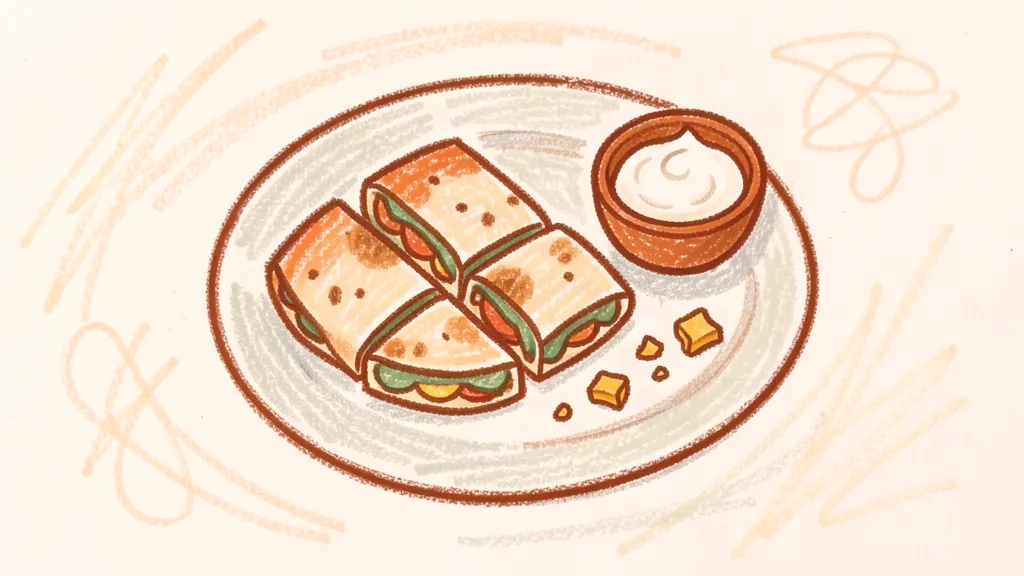
The quesadilla arrived on a taco night in mid-August, at 6:10pm. The toddler ate the plain tortilla and the cheese, then pushed her plate back for more. The filling stayed on the plate. I folded a second one with only cheese and watched her finish it in four bites. That was more tortilla than she had eaten of any dinner in weeks. It has been our most reliable dinner since.
TipThe short version: cheese first, one known second filling, nothing else in the fold. New things go on the side of the plate. Rest the quesadilla two minutes before cutting. Cut it into strips. Yogurt dip on the side. The toddler does the mixing, not you.
Why the quesadilla works
Toddler quesadillas are grip-first food. The tortilla is a handle with the filling locked inside, and nothing gets mixed until she bites into it. That is the opposite mechanism from soup, where the whole fight was about mixing. Soup hides everything under a wet disguise. A quesadilla shows its seams, so nothing arrives as a surprise.
It also keeps the one-dinner rule alive. The same quesadilla feeds the whole table, with the adult version getting extra filling and maybe some hot sauce. Nothing separate gets cooked, which is the same promise as the five-dinner rotation. The NHS’s toddler-feeding page puts it in one line: a toddler needs to eat like the rest of the family.
There is no spoon gymnastics either. Soup needed three tools and a cup; a quesadilla strip needs one hand and a dip. For a toddler who still treats cutlery as a suggestion, that removes half the dinner argument before it starts.
The cheese-first system
The system has three layers; the cheese layer never changes, as it is the glue that holds the fold together. It is also the anchor safe food, since cheese cubes landed on the safe list back in week four. Every quesadilla is cheese plus one second thing.
| Layer | What goes in | Why it works |
|---|---|---|
| The glue | Grated cheese, always | Holds the fold; the safe food she never refuses |
| The known second | Chicken or sweet potato, cooked small | Safe-list food that rides along on the cheese |
| The side plate | One new thing, small amount | The experiment, allowed to return uneaten |
The known second comes from the safe list, so the quesadilla is never a gamble twice. New things do not go in the fold at all. They go on the side of the plate, in a small amount, with no reaction when they come back. That is the same rule as the snack box’s one-new-thing slot. A side dish that gets eaten twice can graduate into the fold.
One fight we had: I wanted wedges; she cut strips. I argued that strips were for babies and wedges looked more like a real meal. She cut the first quesadilla into strips anyway. The strips got eaten; the wedge sat on the plate. Strips it is.
The quesadilla log
We scored five fillings across five nights, one per night, using the same plate-return method as the pancake topping test. Ten meant an empty plate. Here are our numbers, from our quesadilla notes.
Cheese only won because it was never a gamble. Chicken came second, two safe foods wearing a costume. Sweet potato landed third, which fits, because it is the softest safe food we have. Broccoli scored five, which surprised me. It has been safe since week eight, but inside a quesadilla it goes soft. She picks the green bits out. Beans came last. The side-plate rule was born that night.
The log taught us the shape of a quesadilla dinner. The cheese does the work; the second filling only helps when it is already a safe food. The fold is for safe foods; the side plate is for experiments.
Two failures shaped the rules. The first was the lava-cheese night, a Thursday at 6:24pm, when I cut the quesadilla straight from the pan. The melted cheese burned her mouth. She yelped and dropped the strip; the rest of the quesadilla stayed on the plate. No harm done, but the evening was over. Now the quesadilla rests two to three minutes before the knife touches it.
The second was the fold-out, when I served one whole folded half the way I eat them. The filling escaped the moment she bit it, so the quesadilla fell apart on the plate. She looked at the wreckage like I had broken a toy; the strips rule dates from that night. Strips keep the fold intact, which is the entire point of cutting them at all.
Fillings from guaranteed to gamble
Cheese is the only permanent member of the rotation. It is the glue and the safe food, the answer to most bad evenings.
Chicken is the best known second. It is already on the safe list and cooks small, so it disappears into the cheese without changing the color. The toddler eats chicken in a quesadilla without the usual plate negotiation. The forums are full of the same story: meat only works inside a tortilla.
Sweet potato is the second choice, mashed thin so the fold closes flat. It has been safe since week six, sweet and soft as always.
Broccoli works on the side, not inside. On the plate it is a known safe vegetable and gets eaten. The fold changes it into something she picks out, so we keep the two apart.
Beans were the gamble that failed, and they are not even on the safe list. They changed the color of the cheese, so she fished them out, one by one. The forums say to smoosh beans in unnoticed. We tried that twice, once with spinach and once with carrot. Both times she caught us, which is why hiding vegetables costs trust in our house. We do not hide things; the tortilla shows its seams on purpose.
The quesadilla-night drill
Once the system exists, quesadilla night takes one pan and about five minutes of work.
- Tortillas and cheese out before the pan heats.
- Pan on medium. Fold, press, flip once.
- Rest two to three minutes before cutting.
- Cut into strips, finger-size.
- Yogurt dip in a small bowl on the side.
- No reaction to the plate. Eaten or not, it leaves the same way.
The dip is the part parents forget; it is half the system. Yogurt already won the topping test, so the dip is never a gamble. It gives the toddler the mixing control that soup took away. She decides how much goes on each strip, which is the whole point.
Quesadilla night starts at six sharp, like every dinner. A hungry toddler is a harsh food critic; the terrible twos are a scheduling problem before they are anything else. Leftovers go into the bento box. A cold quesadilla strip makes a decent kita snack the next day.
Hot cheese and small strips
Two serving rules, because this touches health and we are not pediatricians. Melted cheese is hot, so we serve it after a rest, never straight from the pan. That lesson cost us one Thursday. Strips get cut finger-size, the same rule as the pasta, the pancakes, the soup. The CDC’s choking-hazards guidance is the reference we check. We also watch the first bites with any new filling.
ImportantThis is our experience, not medical advice. Melted cheese can burn; small pieces cut finger-size are how we serve every quesadilla. The CDC’s choking-hazards page covers the official guidance. If you have questions about your child, ask your pediatrician.
The baby watches from the bouncer beside the table. She is still on milk, so the strips are a preview, not a meal. The yogurt dipping appears to be her favorite show.
The Bottom Line
- Cheese first. It is the glue and the safe food.
- One known second, one gamble max, small amounts.
- Rest two to three minutes. Cut strips, never wedges.
- Yogurt dip on the side; the toddler does the mixing.
- The plate return is the referee.
Filed under food; everything we’ve written is in the archive. We buy our own ingredients; the editorial policy is the honest version of how this site works.