The first six weeks are a blur: here's what actually helped
Newborn care from a parent's seat: the small, specific things that kept us sane when nothing worked like the books said. Personal experience only.
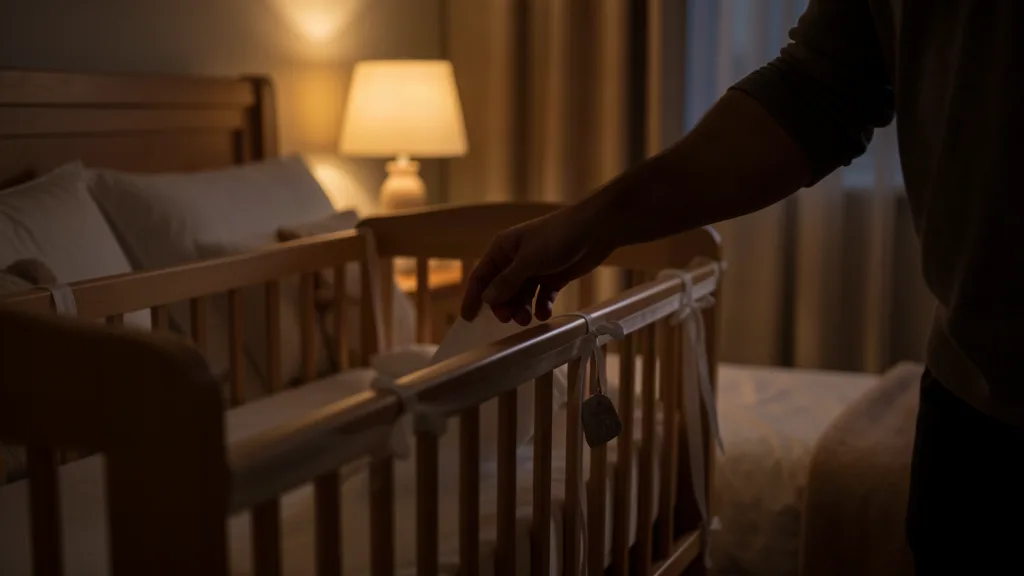
The books make the first six weeks look manageable. They are not. Everyone says the first six weeks are about survival, and they mean it literally. So here are the few specific things that actually helped us. No theory. Just what we did.
The list is short on purpose. We tried a lot of things in those weeks, and almost all of them fell away. What survived was a handful of boring, repeatable moves. Each one cost little and bought back something real. That’s the whole pattern.
Shifts, not heroics
The single best decision we made was splitting the night into shifts. I took 9pm to 2am. My partner took 2am to 7am. That gave each of us one real, uninterrupted block of sleep.
| Shift | Who | Hours |
|---|---|---|
| Late night | Me | 9pm - 2am |
| Early morning | My partner | 2am - 7am |
Not enough. But real. We both functioned. That’s more than I can say for the friends who tried to do every wake-up together. They were noble and exhausted. We were selfish and slightly less exhausted. I know which version I’d pick again.
The point is not the exact hours. It’s that each parent gets one block they can count on. Protect that block like it’s a meeting with your boss.
The mechanics matter more than they sound. The off-duty parent slept with earplugs and a door that stayed closed. The on-duty parent handled everything in their window. Even the stuff that didn’t strictly need doing. A clean handover is half the benefit. You can’t sleep well on a schedule you don’t trust.
A bedside bassinet
A bedside bassinet is a crib you can reach into without sitting up. That’s the whole product, and it’s worth it.
When the baby stirred, I could rest a hand on the baby’s chest without opening my eyes. Half the time, that settled the baby back down. The half-sleep state between “stirring” and “screaming” is where you save your energy. A standalone bassinet means getting up, and getting up means waking up.
If you’re still deciding, we wrote up the full bassinet verdict.
The reach-over is the difference between a wake-up and a glance. A glance costs seconds and no adrenaline. A wake-up costs twenty minutes, even when it only takes five. Across a bad night, that gap is the whole game.
Water and snacks within arm’s reach
You will not get up to fill a glass. You will lie there, dehydrated, holding a sleeping baby, and stay until the baby wakes up. That’s just how it goes.
A 1.5-liter bottle that lives next to the changing mat fixed that. Same for snacks. Muesli bars in the same radius. You never have to choose between eating and holding the baby.
It’s boring. It works. That’s the whole section.
The real trick is the radius. Anything that requires standing up might as well be in another room. The bottle and the bars worked because they were within reach of the chair where the contact naps happened. The first week taught us that. We spent it holding a baby while staring at a glass of water that was two meters away.
White noise on a speaker
White noise is not magic. It just takes the edge off the silence that makes every tiny sound feel like an alarm.
The app version on a phone works fine. We kept a speaker in the nursery from day three. I can’t prove it helped the baby sleep. I can prove it helped me sleep, because I stopped flinching at every creak.
We kept the volume low and the device across the room. Where the white noise sits is a safe-sleep question, so we asked our pediatrician and followed that. The answer was simple and took the guessing out of it.
The flinching is the hidden cost of newborn nights. Every creak, every breath, every radiator tick registers as a potential crisis. White noise doesn’t hide the real sounds. It just raises the floor, so the small sounds stop being emergencies. That alone was worth it.
The registry trap
Here’s the part nobody tells you. Halfway through, you will look at the pile of gear and feel like you’re doing it wrong. There’s a thread that pops up every week. Something like: “my baby is six weeks old and I don’t have any of this.” We felt that too.
You do not need most of the registry. The things that mattered for us were boring. A full stomach. A dry diaper. A parent who wasn’t vibrating with exhaustion. The gear that earned its place in year one turned out to be almost none of the headline items.
TipIf you’re missing half the list, that’s not a sign to buy more. It’s a sign you’re doing fine.
The real soothing tools were even more boring. A walk around the block at 4am. The carrier on a long lap. Contact naps on the couch. None of it needed a purchase, and all of it worked better than anything we registered for.
The registry trap has a second jaw. It convinces you the gear is for the baby. Most of it is for the parents’ anxiety. The baby needs warmth, food, and a body. The anxiety needs shopping. We bought less once we told the two apart.
In practice, the six weeks ran on a very short list:
- A safe place to set the baby down (our bassinet).
- A way to feed without moving much.
- A changing mat with a water bottle and snacks in reach.
- White noise, even from a phone.
- A carrier for the lap walks.
- Permission to abandon the plan.
The last item is the most important. The plan you made in month eight of pregnancy is a stranger to the baby who actually arrived. We stopped following ours around week two, and the blur got softer.
The 4am walk
The most effective tool we had cost nothing and is not on any registry. The 4am walk. When the baby was done with the bassinet, done with the feeding, done with everything except being carried, we walked.
Empty streets, one awake parent, one carrier. The motion did what no amount of rocking in place could. The world moving past was the reset button. Twenty minutes out, twenty minutes back, and the baby was usually asleep by the return leg.
The walk worked because it gave up on the room. The room was the problem: dark, quiet, full of the last failed attempt. The street had no history. Nothing had failed there yet. That freshness was the whole trick.
One honest note on sleep
Every baby is different. Ours slept terribly for five weeks, then suddenly shifted to four-hour blocks, for no reason we could identify. No method unlocked it. It just happened.
ImportantWe asked our pediatrician about anything that worried us and ignored the rest. The NHS safer-sleep guidance is a good, plain-language baseline if you want one. So is their room-sharing advice, which recommends the baby sleeps in your room for the first six months. I’m not giving sleep advice here, because it’s not my place. Health questions go to professionals. Everything else is trial and error.
The four-hour blocks arrived the same way the hard weeks did: without warning. Week five was terrible. Week seven was a different household. Nothing we did marked the change. We just woke up one morning and the night had been, quietly, manageable. The blur ends. Ours did, around week seven.
The Bottom Line
- You do not need most of the registry.
- You need shifts, a bedside bassinet, water and snacks nearby, and permission to stop following the plan.
- The blur ends. Ours did, around week seven.
Filed under newborn; everything we’ve written is in the archive.