Do you really need a swaddle? No, but try it anyway
Swaddles top every newborn registry, but half the parents we asked never used theirs. See our honest answer, the styles we tried, and the rule that ended it.
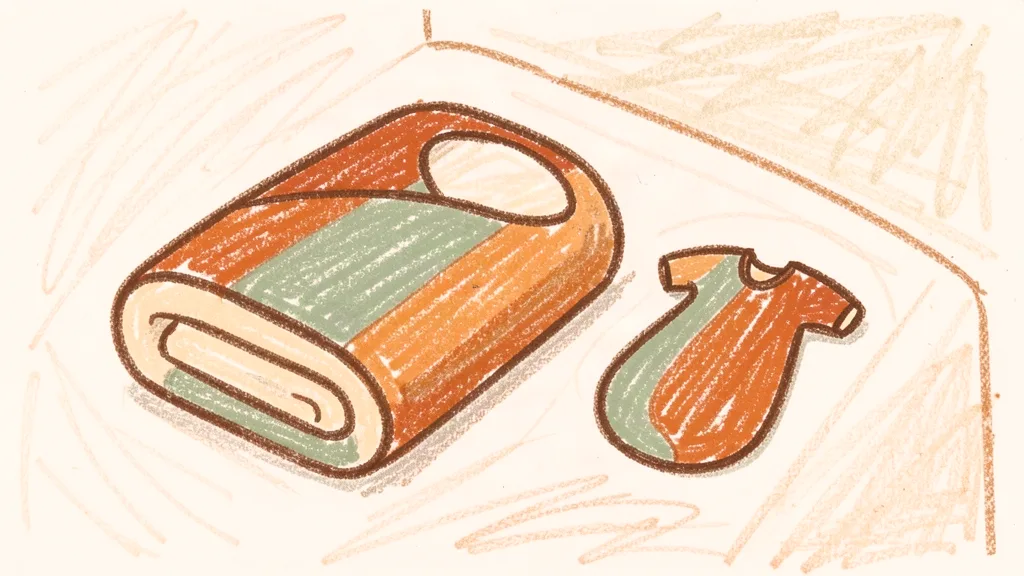
Ask ten parents whether a newborn needs a swaddle, and the answers split down the middle. Half will tell you it saved their nights. The other half will tell you theirs sat in a drawer, never used. Both are describing real babies. Here’s what we learned from the newborn weeks, and the one rule that ended it for us.
NoteShort answer: no, you don’t need one. But most newborns sleep better with one. You can’t know which camp your baby is in until you try. Buy one or two, keep the receipt, and don’t build your registry around it.
The short answer
The swaddle is a tool, not a requirement. Harvard Health says it plainly: babies don’t have to be swaddled. If your baby is happy without it, don’t bother. The forum threads say the same thing in less polished language. Some babies need the tight wrap to sleep. Some fight it from night one and sleep fine with arms free. Some, like our second, don’t care either way.
Our first baby slept dramatically better swaddled. The difference was visible within a week. Our second treated the swaddle like a personal insult. The night we gave up on it, the sleep got better. Same parents, same house, same bedtime routine. Different babies.
That’s the honest answer. You don’t know yet, and you don’t have to decide before the baby arrives. What you can decide now is how much money to risk on the question. One or two swaddles, bought after the baby exists, answers it for less than the price of a takeout dinner. The registry pressure says to stock up. The resale listings are full of brand-new wraps from families whose baby answered differently.
What the swaddle is actually for
The whole product does one job: it stops the startle reflex. Newborns have a reflex where their arms fling out suddenly. It usually fires when they’re drifting off. The fling wakes them, and then the cycle starts again. The wrap keeps the arms contained, so the fling never happens. That’s the entire product. The fabric blends and the designer prints are marketing on top of a reflex stopper.
It is not a sleep solution. It doesn’t make a newborn sleep longer or deeper. It just removes one specific thing that wakes them up. Some babies startle constantly, and the swaddle is transformative. Some barely startle, and the swaddle is fabric with a cult following.
We asked the same question about the bedside bassinet and got the same shape of answer. It’s a tool with a narrow job. Its value depends entirely on your baby.
The styles, compared
There are four things parents actually use. They differ in ease of use more than in how well they calm.
| Blanket swaddle | Velcro swaddle | Arms-up sack | Sleep sack | |
|---|---|---|---|---|
| Ease | Skill required, comes loose | Idiot-proof | Easy, zips up | Easiest |
| Arms | Wrapped tight | Wrapped tight | Up by the face | Free |
| Hips | Depends on technique | Room to bend | Room to bend | Room to bend |
| Best for | Budget nurseries | Parents at 3am | Babies who fight the wrap | The next stage |
| Our take | We never mastered it | The workhorse | A phase, not a system | The handoff |
We bought a muslin blanket first, because every list said to. We never mastered the folds. The thing came loose at 2am, and at 2am you don’t want a technique problem. We switched to a velcro swaddle in week two. That was the workhorse for the whole newborn phase. I wrote about those weeks in what actually helped in the first six weeks. Wrap, press, done. The baby couldn’t break out, and neither could we.
We tried an arms-up sack for a few weeks when the baby started fighting the wrap. It worked, but the price stung and the runway was short. The sizing was fiddly, and the zipper bunched under the chin. By the time we had it figured out, the swaddle phase was almost over anyway.
When the swaddle has to end
The end date is not a suggestion. It’s the first sign of rolling, or around 8 weeks. Whichever comes first. Cincinnati Children’s is blunt about why. A swaddled baby who rolls onto the stomach can’t roll back. That’s a suffocation risk. The wrap stops being helpful the moment the baby can move.
How did we know it was time? The same way you know most parenting transitions. The gear stopped matching the baby.
- The baby rolls onto the side or belly during sleep.
- The baby breaks an arm out of the swaddle at night.
- Day naps unswaddled go better than night sleeps swaddled.
- The swaddle feels tight, and you’re sizing up every week.
The transition itself is gentler than the forums make it sound. We went one arm out for a few nights. Then both arms out, then straight to a sleep sack. The first two nights were rough. By night four, nobody remembered the swaddle. The sleep sack became the new normal. The swaddle went into a drawer, retired at the same age as the bassinet. It lived for eight weeks, and it earned every one of them.
One practical note from the transition weeks. Don’t start it the same week you’re both back at work. Pick a stretch with margin, because the first nights will cost you sleep. The forums call it a battle; it’s really just a few tired nights in exchange for a safer setup.
The safety frame
Swaddling is safe when done right and risky when done wrong. The rules are simple, and both medical sources above repeat them. Baby on the back, always, swaddled or not. Two fingers of space between chest and blanket. Hips free enough to bend up and out. Nothing loose. Stop at the first roll.
The hip part matters more than the lists suggest. A wrap that holds the legs straight can strain the hips. The two-finger rule handles the chest, and the leg pouch handles the hips. Look for wraps with a pouch or a wide bottom, and check that the baby can bend the knees up. The safety guides all repeat the same line: leave room for the legs to bend up and out.
ImportantWe did not wing this one. Our pediatrician walked us through the safe-swaddle basics before we left the hospital. The rules were simple: back to sleep, firm but not tight, hips free. I’m not giving advice here. Ask your pediatrician or midwife what they recommend, and follow that.
The loose-blanket risk is also real. It’s the reason we never mastered the muslin wrap. A swaddle that comes undone at night is a blanket near a sleeping baby’s face. The velcro version never had that failure mode. That alone justified its price.
The Bottom Line
- You don’t need a swaddle. Try it, but don’t build the registry around it.
- Its one job is stopping the startle reflex, and it’s very good at that job.
- Velcro beats blanket at 3am. Buy one or two, not a collection.
- The end date is non-negotiable: first roll attempt or 8 weeks.
- Safety rules aren’t optional. Ask your pediatrician.
More gear notes: the gear that earned its place in year one. Filed under newborn; everything we’ve written is in the archive.