18-month sleep regression: 5 responses, 1 that worked
The 18-month sleep regression hit us as split nights, not bedtime fights. We tried five responses from the hallway chair; one boring one ended it in three and a half weeks.
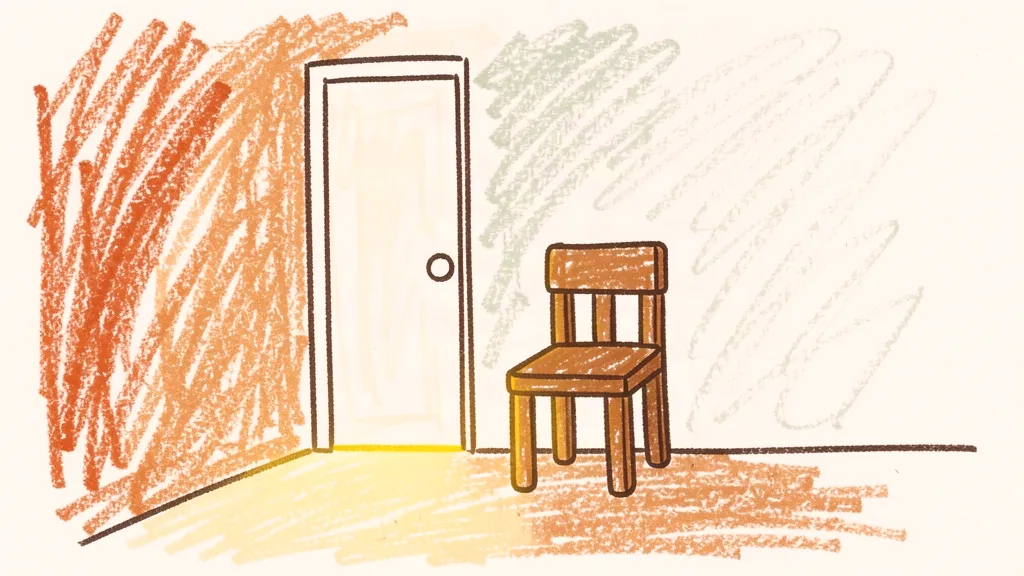
The 18-month sleep regression arrived at 2:14am as a wake, not a bedtime fight. Our toddler stood in the crib, calling “Mama? Papa?” into the dark, and the audio monitor caught it first. She was fine, which was the confusing part, and she was also wide awake for two hours. Over three and a half weeks we tried five responses from the kitchen chair we moved into the hallway. Four of them failed in ways that made the nights longer. One — the boring one — ended it. This is the whole list, in the order we tried it, with the log that proved the end was coming.
NoteA regression is a blip, not proof that you broke something. It ends, usually before you believe it.
The five responses at a glance
| # | Response | What happened | Verdict |
|---|---|---|---|
| 1 | Accepting it was split nights | Woke midnight to 3am, stayed awake for hours | The real problem |
| 2 | The big response: pick-up, rock, hold | Worked once, then became expected | Mistake |
| 3 | The 4am bed transfer | The rescue became the new normal | Mistake |
| 4 | The 3:10am negotiation | She out-negotiated me at eighteen months | Mistake |
| 5 | The hallway chair, one answer every wake | Ended it in three and a half weeks | What worked |
1. Split nights, not bedtime fights
The name made us expect bedtime battles. What we got was a toddler who slept fine and woke in the small hours. The pattern took a week to see, because each night looked like an accident. She went down fine at 7pm, then woke somewhere between midnight and 3am. She stayed up for hours, not crying, not upset. Chatty and bright-eyed, treating 2am like playtime, while the forums gave it a name: split nights.
That distinction was the first useful thing we learned, because it ruled out every clever bedtime fix we knew. This was not a phase of waking; it was a phase of staying awake.
| What we expected | What happened | |
|---|---|---|
| The shape | Bedtime resistance | Wake-and-stay-awake, midnight to 3am |
| The length | A bad week | Three and a half weeks |
| The fix | One clever method | The boring response, repeated |
| The end | A clean break | A Tuesday, then most nights |
The timing was not random. Around 18 months, the separation anxiety peaked and the language explosion started. Both hit at once in our house, which made for a child who could name what she wanted at 2am. She had a cold that week. Her molars were pushing through at the same time. Illness and teething do not cause regressions by themselves, but they reliably make one louder. We would meet that pattern again once kita started (the first year of viruses).
This happened before the baby existed, so the hallway era belonged to the toddler alone. That part, I miss.
2. The big response: pick-up, rock, hold
The full program was the first mistake, and the strongest one, because it worked exactly once. Pick-up, rocking, holding, the whole rescue kit, and she went back down. The next night she stood up and waited for it. She now expected the program at every wake, which was the lesson we kept refusing to learn. The response had stopped being a rescue and started being the routine.
3. The 4am bed transfer
The second mistake was one exhausted night of surrender: she came into our bed, and we all slept. It felt like a fix because it produced sleep immediately. The next night she stood at the crib rail and demanded the transfer at 3:58am. The rescue had become the new normal. Unwinding it took three nights, each one worse than just sitting in the hallway would have been.
4. The 3:10am negotiation
I tried negotiating once, at 3:10am, which is a war crime against your own patience. She counter-offered. Then she out-negotiated me at eighteen months old, which is the age at which she could not yet say “spoon”. Talking at every wake was my contribution to the escalation. My partner never did it, and her column of the log stayed shorter than mine.
5. The hallway chair: one answer, repeated
The fifth response was the hallway chair, and it was not mine. The chair moved into the hallway on night four. The hallway light stayed on, dimmed to its lowest setting, for the whole three weeks. I kept going in to talk and offer water, while my partner sat outside the door in the dark. Her hands stayed in her lap.
The things that actually helped:
- The same response at every wake, no escalations mid-night.
- The hallway chair, instead of the crib-side pickup.
- Quiet presence over talking and negotiating.
- The door open and the monitor volume low.
I thought it was cruel. It was the only thing that worked; she did it for three weeks without saying I told you so. I have not forgotten that. The lesson, written to the January version of me: the response is the routine. Make it boring on purpose, because boring wins.
What the log showed
We logged every wake, because the fog made everything feel permanent. The log was the counterargument, since nothing else convinced us the end was coming.
The decline was real but not linear. Week three was the grind, when the decline stalled and we were sure we were past the worst. Week four collapsed. The last logged wake was a Tuesday; then the column went quiet.
How we judged these five responses
We did not score the list on feels; three questions sorted it:
- Did it work by the third night? The big response and the transfer both produced one good night and then backfired.
- Did it create new demands? Every rescue did; the chair created none, because there was nothing to request.
- Was it survivable at 2am without an audience? Negotiation failed this test instantly.
- Did it match our pediatrician’s line? Regressions are normal and temporary; keep the routine plain, because plain gives a small child nothing to negotiate. That was our pediatrician’s advice, not universal guidance.
- What did it cost? Nothing. The chair was already ours, which is why it got promoted to a coat rack later.
The Bottom Line
- The 18-month regression showed up as night waking, not bedtime fights.
- The two rescue responses became the routine itself; both were mistakes.
- The plain response won: one answer, repeated from the hallway chair.
- We logged every wake; the log proved the end was coming.
- It lasted three and a half weeks, then ended on a Tuesday.
It ended the way it started, without ceremony: a Tuesday full night, then most nights, then all nights. What we kept: the door-open system and the hallway chair for the next regression. The chair is still there, which means it got promoted to a coat rack.
The stalling era came later and needed different tools. Bedtime stalling is a negotiation, while night waking is a separation problem. The same theme shows up at the kita gate in daylight (drop-off separation anxiety). Bedtime got its own campaign months later (toddler bedtime stalling).
ImportantThis is our experience, not medical advice. Sleep is health-adjacent territory, so check with a professional for anything that worries you. If night waking is extreme or long, or if it comes with health concerns, ask your pediatrician. The AAP’s sleep hub is a good place to start.
The toddler sleeps through now, while the baby is in our room and writes her own chapter. The bassinet post explains how she got that close (why the bassinet earned its place). The expensive monitor is a separate story: we returned it. The €20 audio monitor from the hallway era is still doing the listening, which feels like a small victory. Her worst meltdowns had been a schedule problem in disguise before this, per the scheduling post. The regression was the first time the answer was patience instead of a fix. I still glance at the chair when I pass it at night, which is a habit I do not mind.
Filed under toddler; everything we’ve written is in the archive. The editorial policy is the honest version of how this site works.